It is a strange time to be a thinktank policy analyst in Washington. On one hand, the policy papers keep coming—well-researched, sober, often sensible attempts to offer realistic paths forward on North Korea and the ROKUS alliance.
Significance. The April 2025 cyber attack on SK Telecom, South Korea's largest mobile carrier, has exposed critical vulnerabilities in the nation's digital infrastructure.
Artificial Intelligence (AI) has changed the rules of phishing. It no longer relies on clumsy English or poorly spoofed addresses. Today, it’s powered by large language models (LLMs), social graph mining, and contextual mimicry.
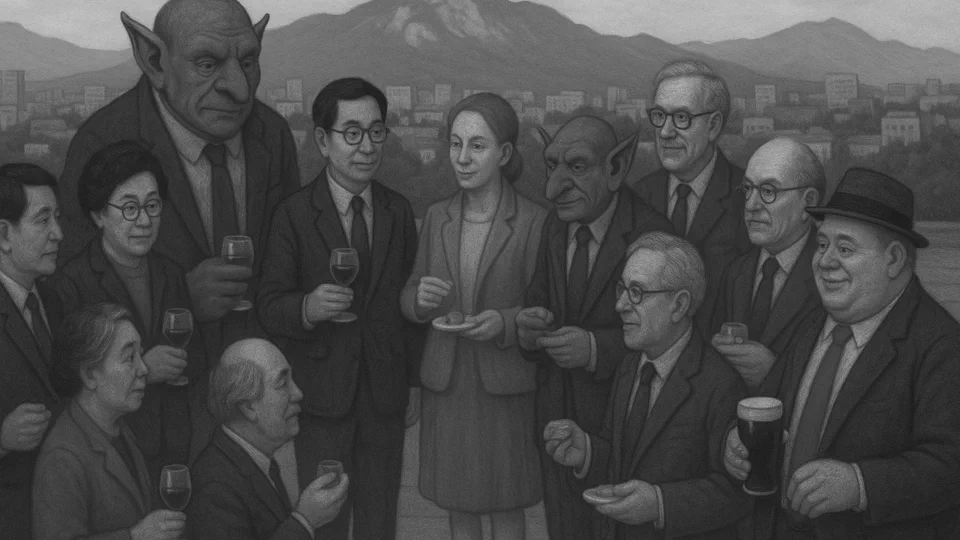
Are North Korea Watchers just different? Or is there more to their distinct proclivities? We’ve all felt it before. At least, anyone who’s spent more than their fair share of time amidst North Korea Watchers, has felt it before. A disturbingly acute sense that not all is quite right.
Significance. South Korea’s nuclear power export sector stands at a critical juncture. Major candidates in the upcoming presidential race have now publicly committed to support its growth. The industry is poised for significant acceleration regardless of the electoral outcome.
For a country as geopolitically charged and historically complex as Korea, one might expect a rich tapestry of speculative fiction — alternate histories, emotional futurisms, surreal dystopias — flowing from English-language writers.
For decades, diplomacy on the Korean Peninsula has been trapped in a rigid and repetitive cycle, largely shaped by the strategic interests of others. American security priorities, Chinese strategic concerns, Russian opportunism, and Japanese anxieties have each carved deep grooves into how the world thinks about Korea.
Trump just said out loud what had been true for seventy years: The alliance was always for sale. It was always a transaction. The challenge now is ensuring that it is a valuable transaction - and this is where Trump will fail.
Policymakers want something simple. They want a story. One that tells them who’s good, who’s bad, what went wrong, and how to fix it. And they’re not wrong. Stories stick. Data doesn’t. Narrative wins. Every time.
The Trump administration's decision to substantially reduce tariffs on Chinese imports marks a shift in what started out not as coherent trade policy but as macho bluster. That macho bluster became all but weak and sterile with China, but is still biting and bullying with South Korea.