The Trump Administration’s DOGE is a bull in the international relations China shop. It’s taken a wrecking ball to USAID, RFA, VOA, the Wilson Center and USIP - institutions of international relations that most of us grew up with and held to be inviolable.
As South Korea prepares for the Constitutional Court’s verdict on President Yoon Suk Yeol’s impeachment this Friday, an avalanche of special event podcasts and live-streams are well underway. Every dick and his dog man and his dog person and their dog has their own extra special angle gleaned from the hundreds of other commentary pieces piling up across the planet.
South Korea has long been shaped—directly and indirectly—by the intellectual legacy of America’s most influential international relations thinkers. Figures like Hans Morgenthau, Henry Kissinger, and Zbigniew Brzezinski cast long shadows over South Korea. It is through their works that decision-makers formed modern U.S. policy on South Korea.
Maybe it’s my 1990s Australian teenage years of wagging* school and watching corny American television repeats, but I often listen in on conversations between academic, political, and/or government colleagues and get bored, so I return to form and act as a tabloid talk show host. I become a foreign policy Jerry Springer, throwing out difficult topics, inciting anger, and provoking responses.
Donald Trump’s return to the White House has already reshaped U.S. foreign policy, and some commentators believe there will be no return to post-Cold War norms.
Middle powers do not have the capacity to shape changes in the strategic environment; rather, they react to them. What distinguishes them from smaller powers is their capacity to plan how to react in anticipation of change. If they’re lucky, reaction is planned in advance and they secure advantage.
Spending time in Seoul’s epistemic community—among journalists, academics, and policymakers—I’m often struck by how rarely Australia is seen as an independent actor in international affairs. When discussing regional security, trade policy, or strategic alliances, Australia is routinely framed as an extension of the United States - often an annoying and arrogant extension.
The Cold War often feels like the defining moment of modern geopolitics, the era where alliances were forged and the global order was set. But in the grand sweep of history, it is merely a brief interlude in the much longer story of regional dynamics shaped by geography.
In his first speech to Congress of his second term, U.S. President Donald Trump turned very briefly to South Korea. Trump claimed that South Korea’s tariffs on U.S. goods are four times higher than those imposed by the United States.
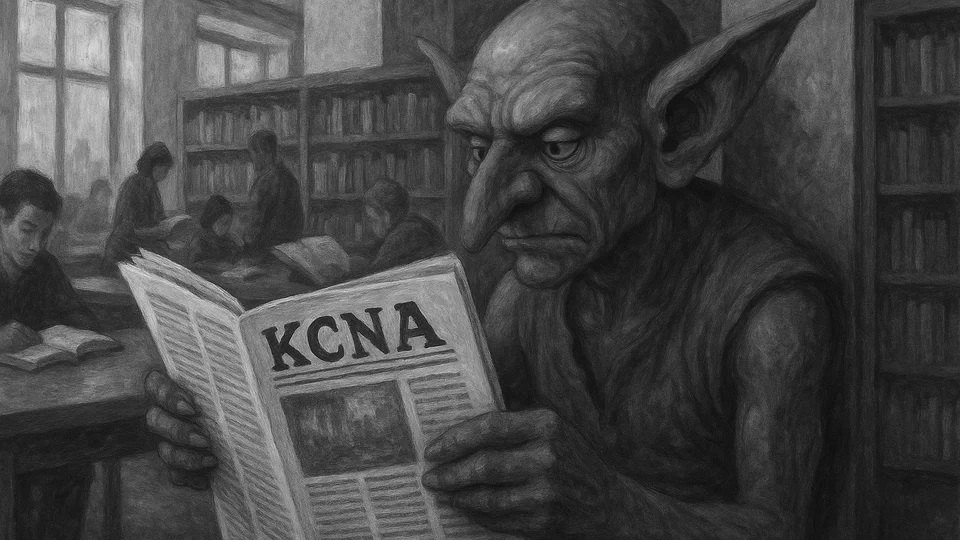
Every North Korea Watcher sooner or later questions what they do.There’s the relentless routine of reading write-ups on North Korea, scanning academic dribble for insight, and dissecting the latest KCNA image. They see highly respected and feted North Korea Watchers rehashing the same crap year after year, and they know that their own ideas will never be heard beyond two graduate students and a dyslexic professor who ended up in the wrong room at an academic conference.