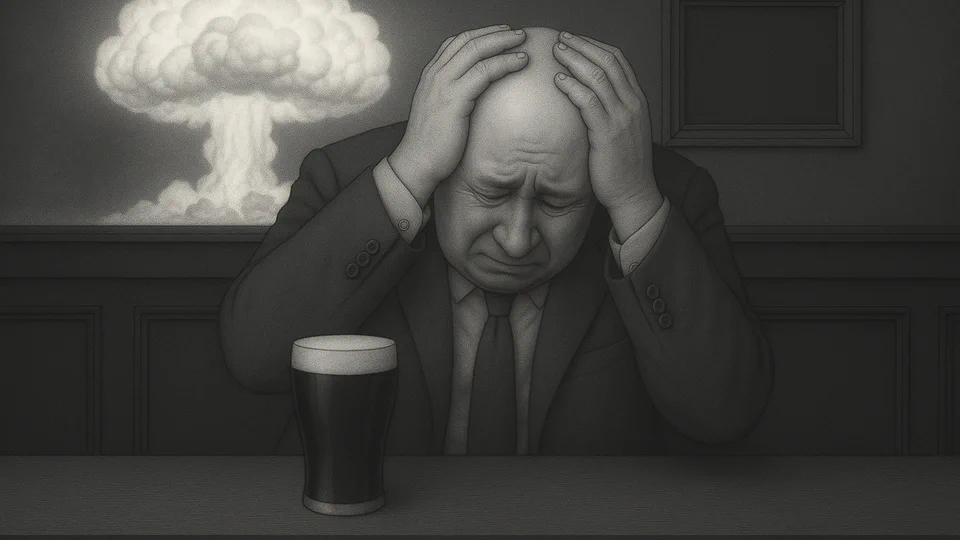
For the past three decades, the notion that North Korea’s nuclear weapons are about survival, made sense. First, they offset the vast conventional superiority of the United States and South Korea. Second, in light of the steadily dropping number of states in the Axis of Evil, they effectively deterred any attempt at regime change. Over the last year, survival seems less of a priority.
Kenneth Waltz’s “The Spread of Nuclear Weapons: More May Be Better” seems to have passed from academic to popular reading in South Korea. I saw an ajumma in the park reading it while her poodle panted beside her in a dog pram. It was a very unique situation.
We’ve all been there: trapped in a conversation with someone who thinks they’ve cracked the geopolitical code, loudly proclaiming why South Korea must or must not develop nuclear weapons.
As the tension builds up between North and South Korea, sooner or later we’re going to see articles on what to do if conflict breaks out.
A nuclear detonation in the heart of Seoul would bring unprecedented devastation, transforming the city into a wasteland of destruction and despair.
The Washington Declaration will sooner or later become irrelevant because it doesn’t address the behavioral justifications in the pursuit of nuclear weapons
Without a commensurate education and publicity campaign, the Washington Declaration will never address the broader, underlying sense of vulnerability ingrained in the language, geography, history and culture.
A South Korean decision to pursue nuclear weapons would substantially transform strategic outlooks across the region.
In the end, stopping South Korea from heading down the nuclear path requires less academic waffling, and more diplomacy.
The Korean Peninsula is currently in a pattern of tit-for-tat provocation: short and long-range missile tests; combined training exercises; artillery live-fire exercises, and border area fighter jet sorties and would reach a new height with a nuclear test.