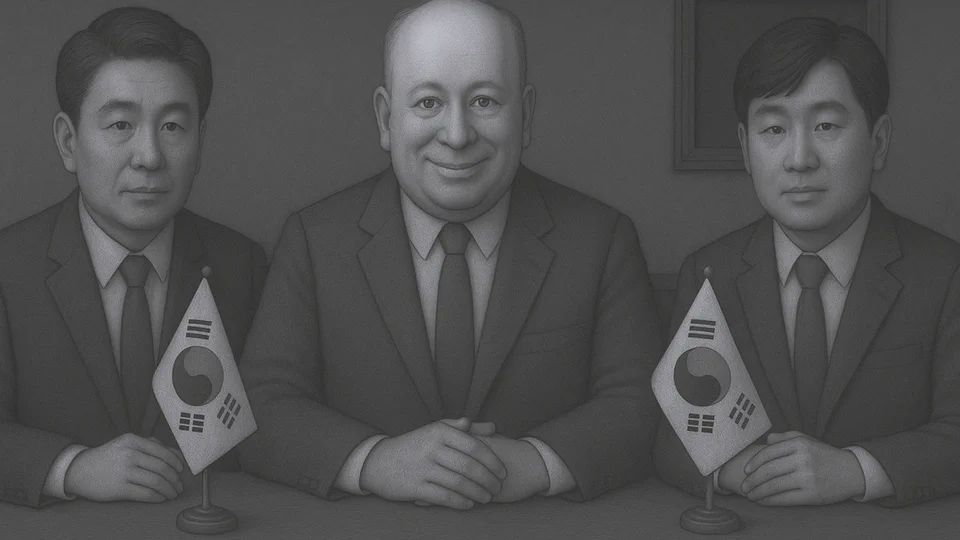
The Korean War remains one of the defining conflicts of the Cold War, shaping the geopolitical landscape and the Korean Peninsula. Both sides came close to complete victory. What if the war had ended in 1950 with a unified Korea?
South Korea’s conservatives like to change their party name after a f@*k up - and this time, they’ve really f@*ked up.The public is really pissed. Nobody wants this - and soon the economy will start to feel the effects as general strikes spread and investors say WTF? I’m outta here! What confuses most people, is why the party leader would want this - he’s shooting himself in the foot. He will soon be as unpopular as Yoon.
South Korea comes across as the darling of non-Korean academics. From scholarly articles to international conferences, South Korea’s political and diplomatic maneuvers are showered with glowing accolades. It’s as if every foreign academic is competing in an unspoken game of - Who can praise Seoul the most?
The South Korean government is set to amend its espionage laws, previously focused on activities aiding North Korea, to encompass actions supporting other foreign powers.
We’ve all been there: trapped in a conversation with someone who thinks they’ve cracked the geopolitical code, loudly proclaiming why South Korea must or must not develop nuclear weapons.
Protests by Christian groups on 27 October 2024, followed a court ruling granting same-sex couples access to state health insurance, highlighting ongoing resistance to anti-discrimination reforms.
South Korea has announced plans to construct four small modular reactors (SMRs) as part of its broader effort to rejuvenate its nuclear industry and establish energy security.
Political polarization and the influence of the far-right and far-left on political discourse has increased with policy positions once considered extreme, now moving into mainstream debate.
The awarding of the Nobel Prize for Literature to South Korean author Han Kang demonstrates South Korea’s growing cultural influence, and the commensurate increase in global attention to its social challenges.
In celebration of Armed Forces Day, the South Korean government will host a large-scale military parade in Seoul on 1 October 2024.